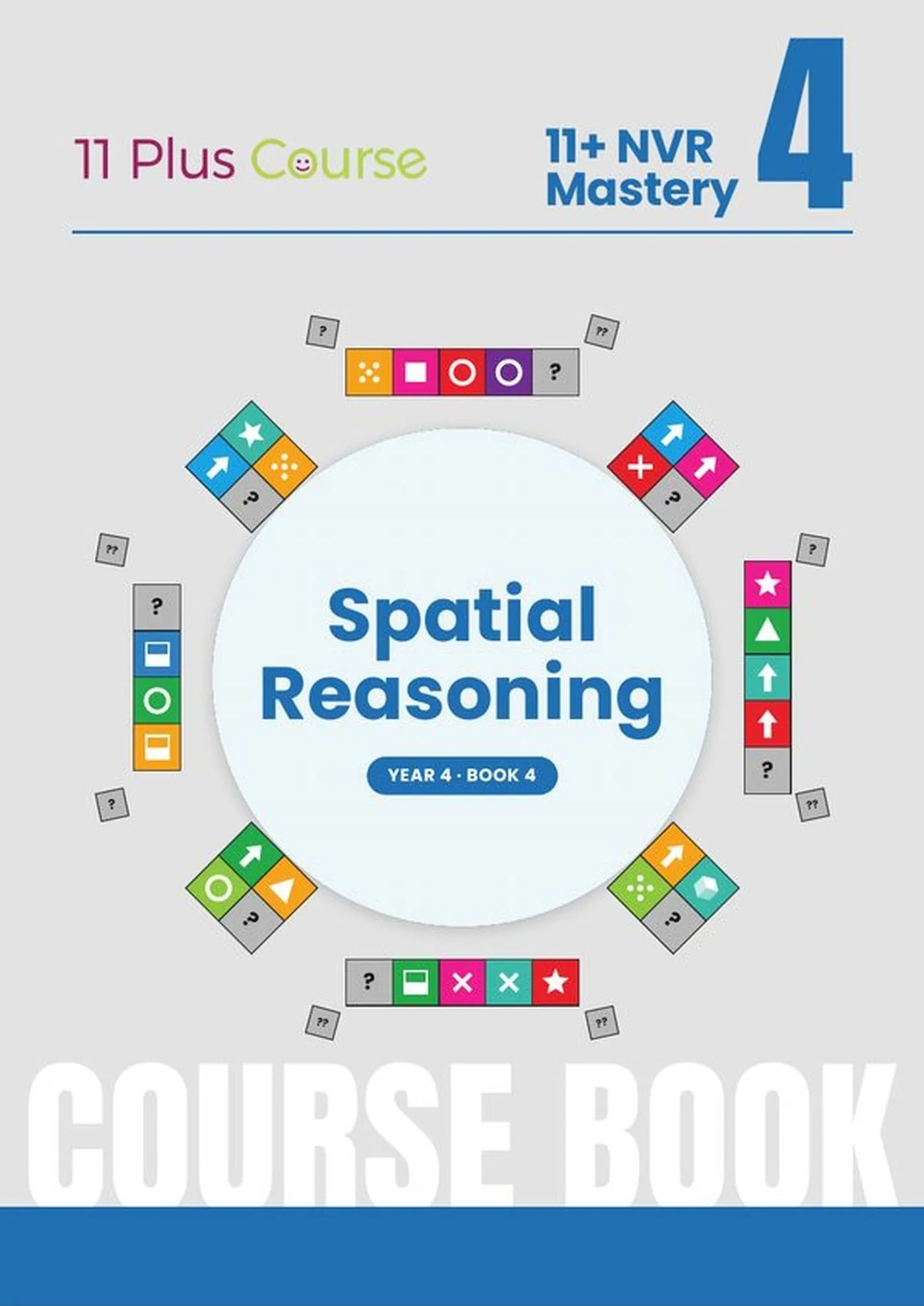
 Click to enlarge
Spatial Reasoning
Nets, cubes, views and folding.
- 12 tests of 40 questions in every book, in two sections of 20
- No more than 20 questions of one type in a week, so each type is learned properly
- Built for three passes: two timed attempts on the progress chart, then a cold third pass before the exam
- Full answer key
Want the whole series? The full Non-Verbal Reasoning series is £197, under £20 a book.
How this book is used in our course
Each test is sat under the clock: two sections of 20 questions. Mark, record, and go back over every wrong answer with the child explaining the rule they missed. The book is built for three passes: the second attempt weeks later proves the rule stuck rather than the answer being remembered, and a cold third pass before the exam proves it is still there.
Where it sits in the series
- Previous book in the series: Book 3, Codes, Grids & 3D Basics
- Next book in the series: Book 5, Year 4 Test Book
What's inside NVR Mastery 4
Five real pages from the book, so you can see exactly what your child will work from. All 10 sample pages are in the viewer.
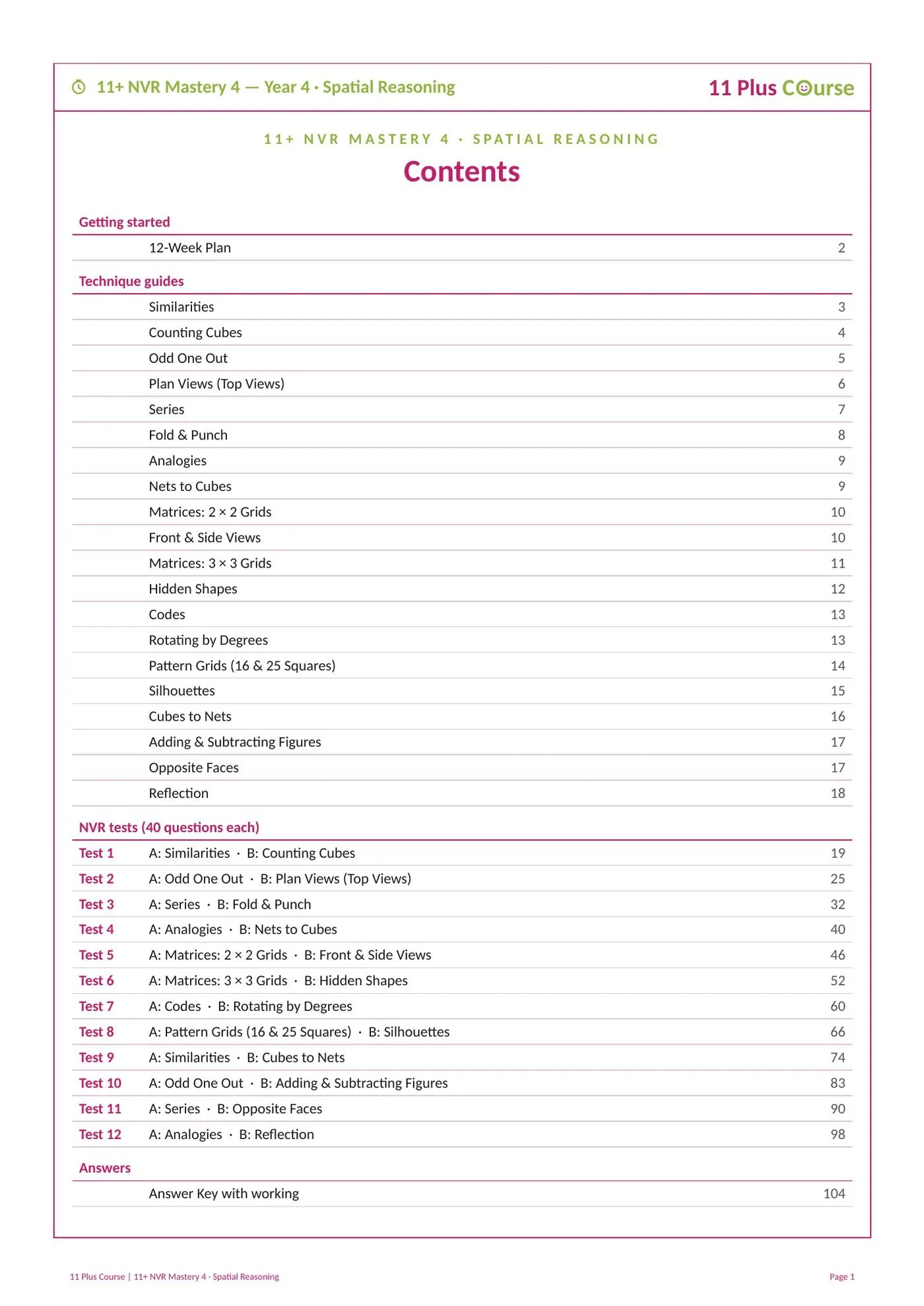
The spatial book: counting cubes, plan views, fold and punch, nets to cubes, cubes to nets, front and side views.
Every test pairs a GL core type with a spatial one, so the spatial practice never crowds out the types that carry most marks. These are the questions children guess at, because they have never been shown how to check them. Each one has a technique guide with a worked example.
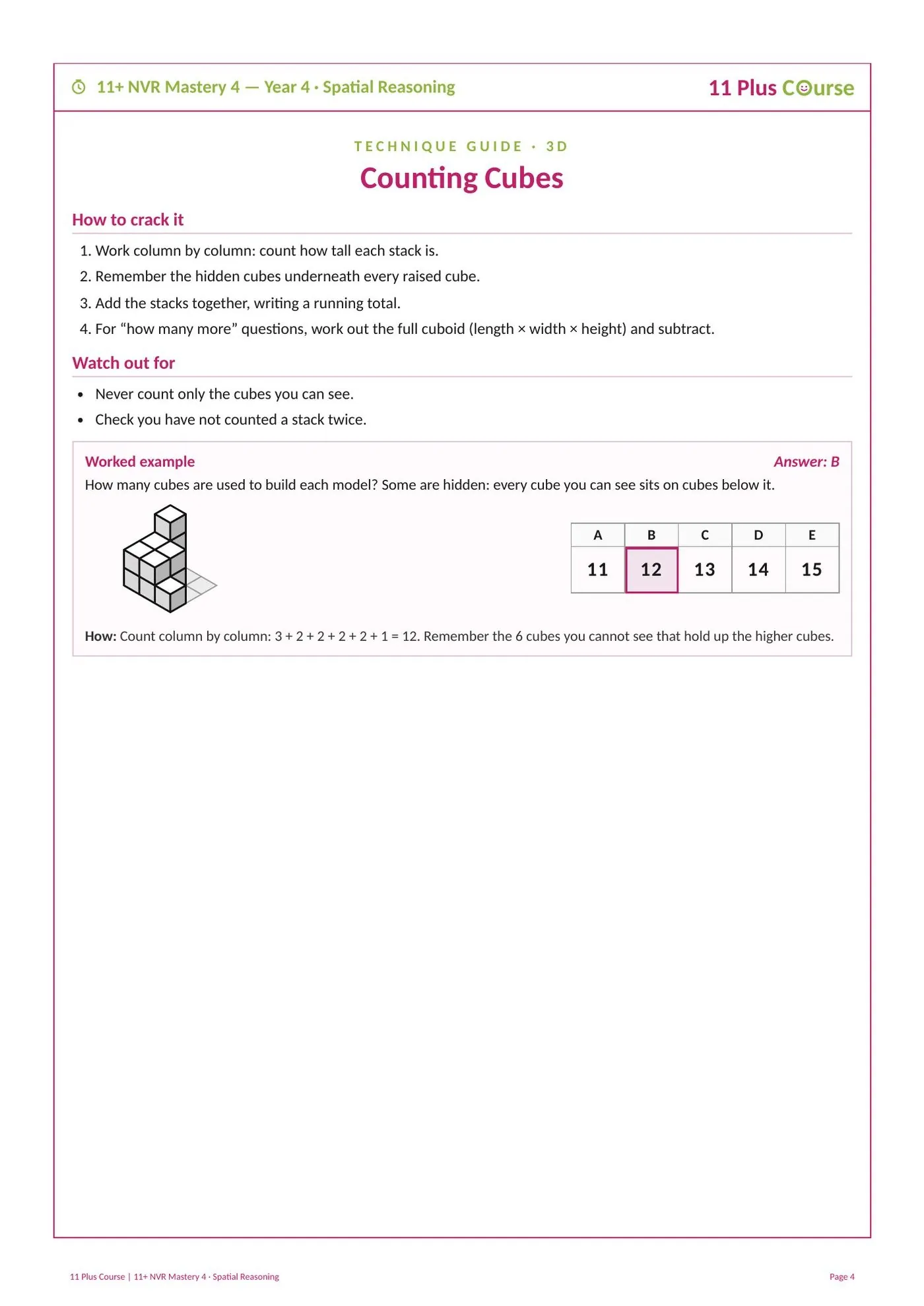
Column by column, a running total, and the hidden cubes underneath every raised one.
Four steps and two warnings: never count only the cubes you can see, and check you have not counted a stack twice. For "how many more to make a cuboid" questions, work out length × width × height and subtract. The worked example shows every step.
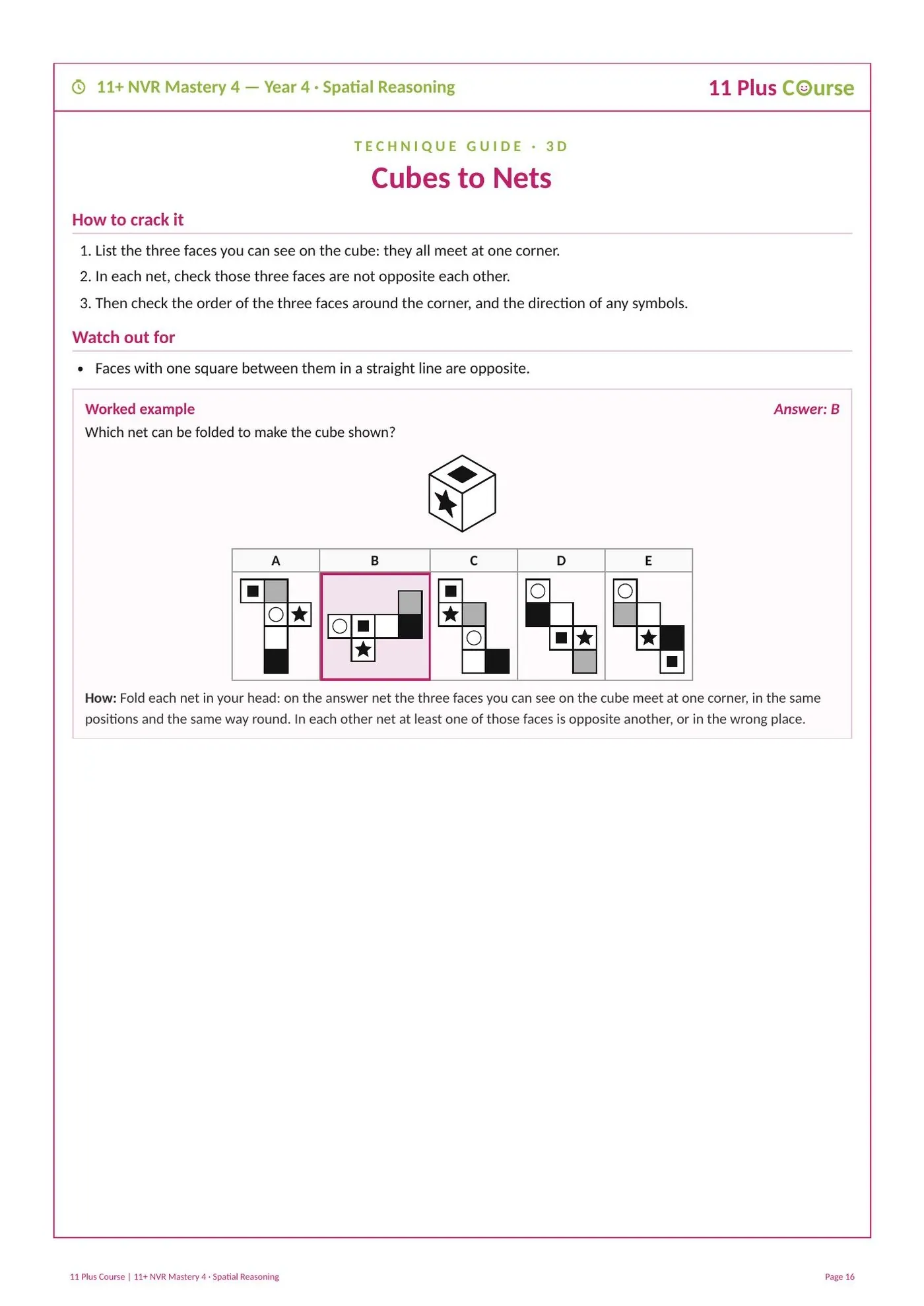
The three faces you can see meet at one corner, so on the right net none of them can be opposite.
List the three visible faces. In each net, check those three are not opposite each other, which removes most options at once. Then check the order of the faces around the corner and the direction of any symbol. A method, not a feeling.
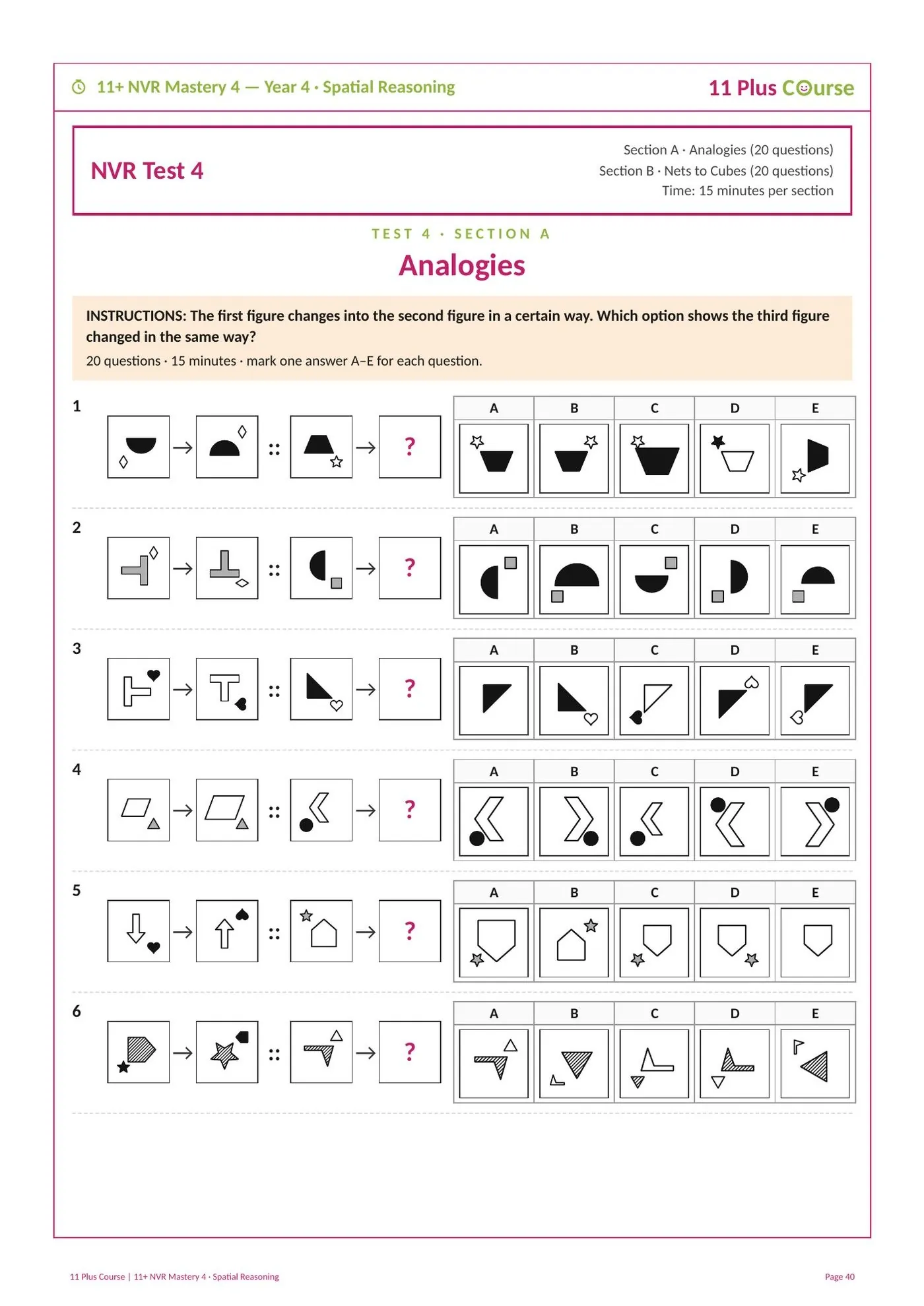
"This is to this as that is to…": the change must be found, then applied.
Twenty analogy questions, each needing the same change applied to a new figure. Children who spot the change but apply it to the wrong part lose the mark; the technique guide teaches them to check every feature.
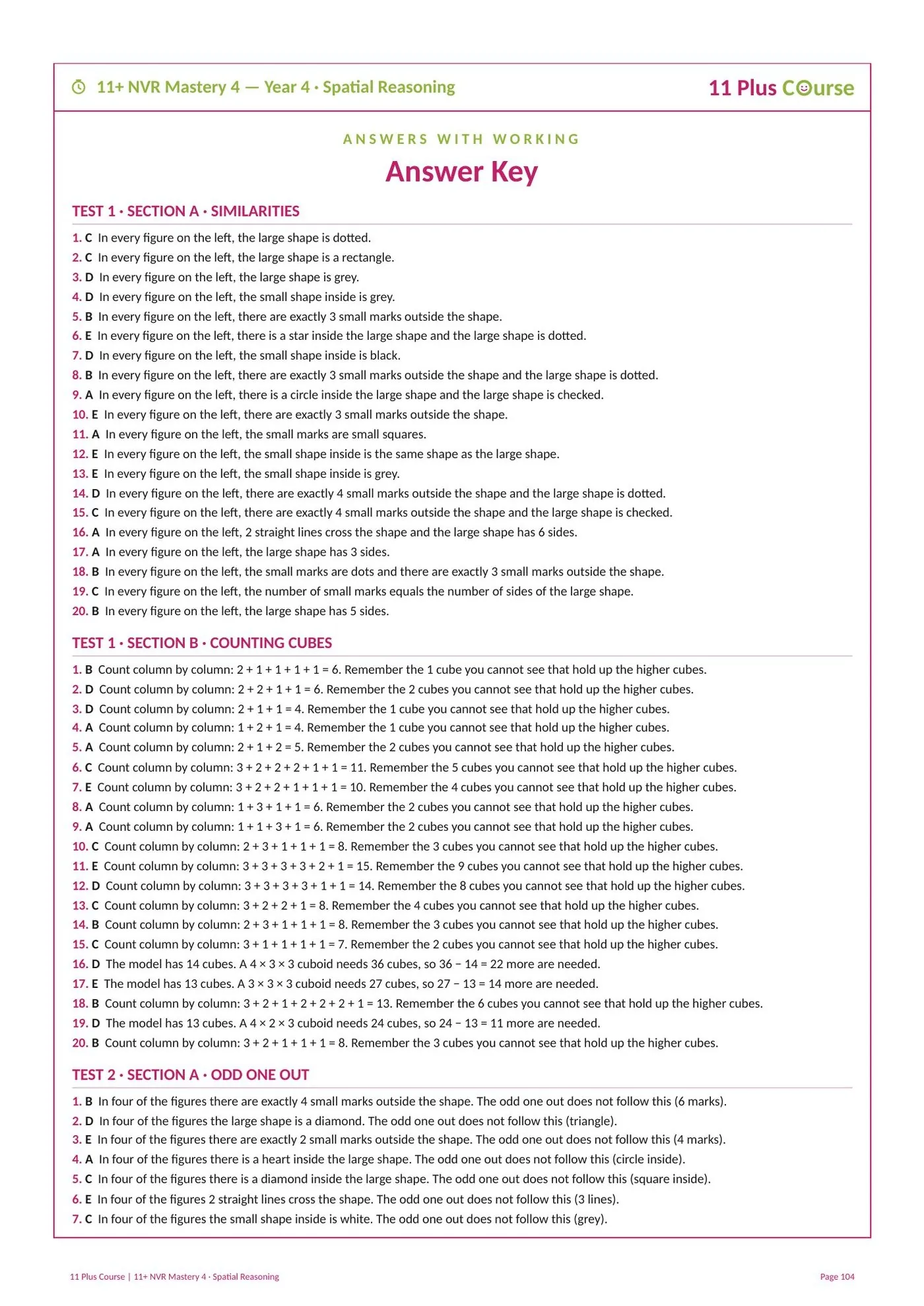
Every answer with the rule or count that proves it.
"5. B: In every figure on the left, there are exactly 3 small marks outside the shape." The working names the feature, so the re-try is aimed at the right thing.
All 12 tests in the book follow the pattern shown here.
Other Year 4 books in NVR Mastery

NVR Foundations
The first meeting with series, odd one out and analogies.

Shapes & Patterns
Rotation, reflection, shading and the patterns behind them.

Codes, Grids & 3D Basics
Shape codes, matrices and the first 3D questions.

Year 4 Test Book
12 mixed tests of everything in Books 1–4.