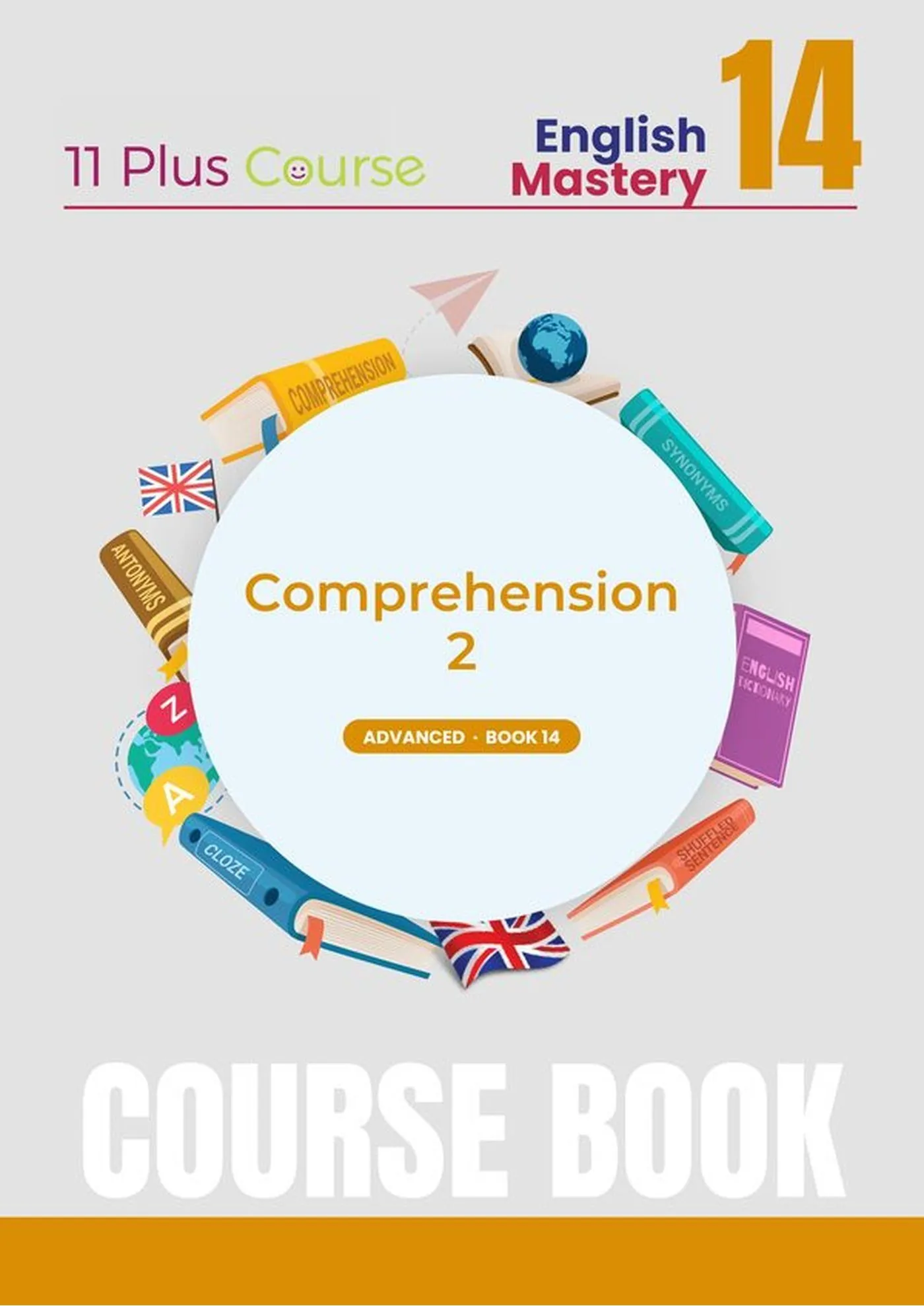
 Click to enlarge
Comprehension 2
Harder passages, longer answers, the first step into inference.
- 30 passages in the book
- Original and classic passages, written or adapted for the book
- Full answer key, independently re-checked question by question
Want the whole series? The full English series is £497, under £19 a book.
How this book is used in our course
English books are worked in short daily sessions rather than one long sitting. For vocabulary, the child covers the meaning, says it aloud, then checks; words that are missed go on a card for the week. For comprehension and cloze, the child attempts the passage under a loose time, then marks against the key and rewrites any answer that lost marks.
Where it sits in the series
- Previous book in the series: Book 13, Shuffled Sentences 2
- Next book in the series: Book 15, Cloze Sentences 2
What's inside English Mastery 14
Four real pages from the book, so you can see exactly what your child will work from. All 8 sample pages are in the viewer.
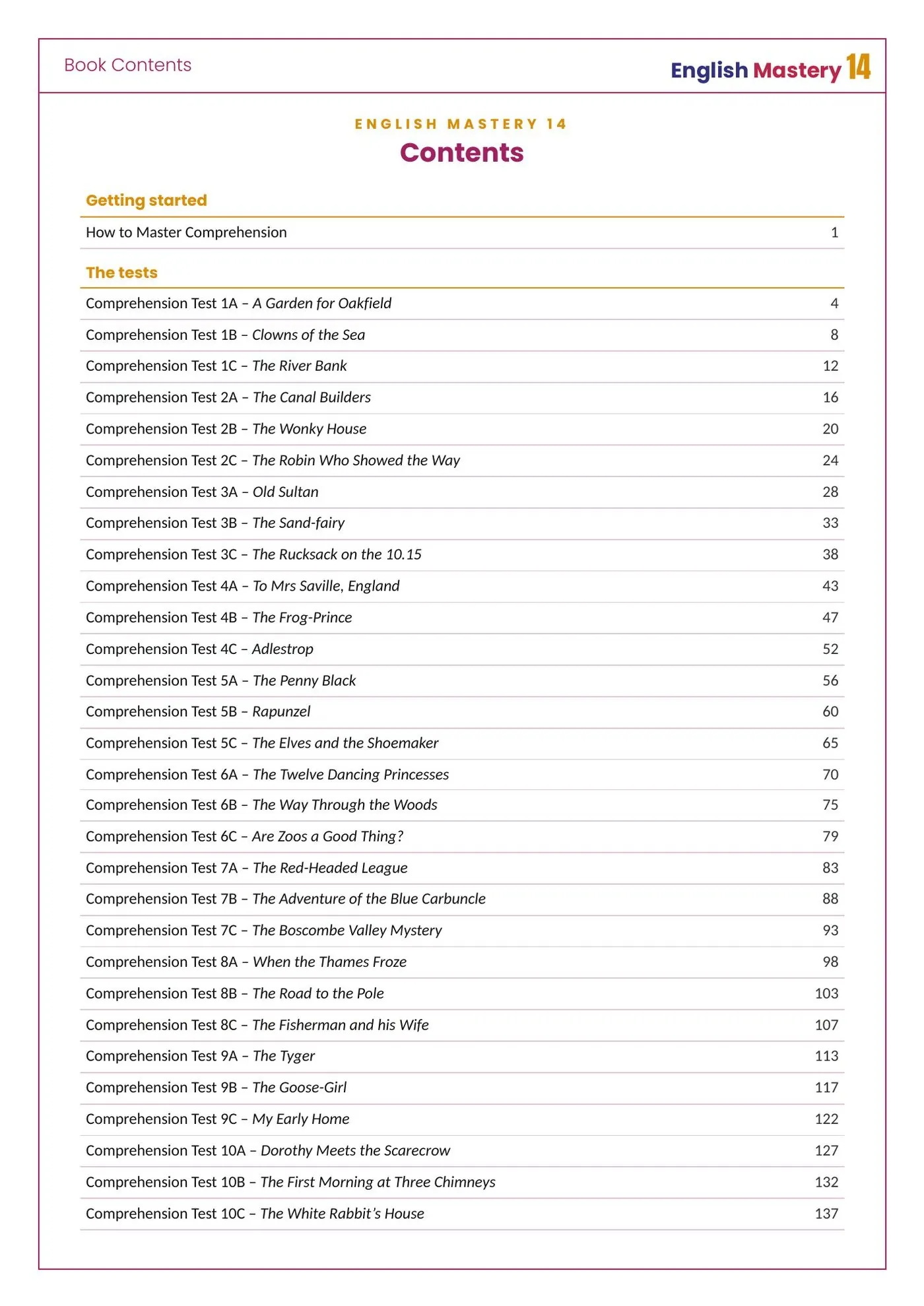
Thirty passages in ten levels, three per level: letters, Grimm, Conan Doyle, Blake, Kipling, Baum, Nesbit, Carroll, and non-fiction on canals, the frozen Thames and the race to the Pole.
A Garden for Oakfield is a persuasive letter. The Red-Headed League, The Blue Carbuncle and The Boscombe Valley Mystery are Sherlock Holmes. Rapunzel, The Goose-Girl and The Fisherman and his Wife are Grimm. Adlestrop, The Tyger and The Way Through the Woods are the poems. Dorothy Meets the Scarecrow, The First Morning at Three Chimneys and The White Rabbit’s House finish Level 10. This is the range an independent school paper draws from.
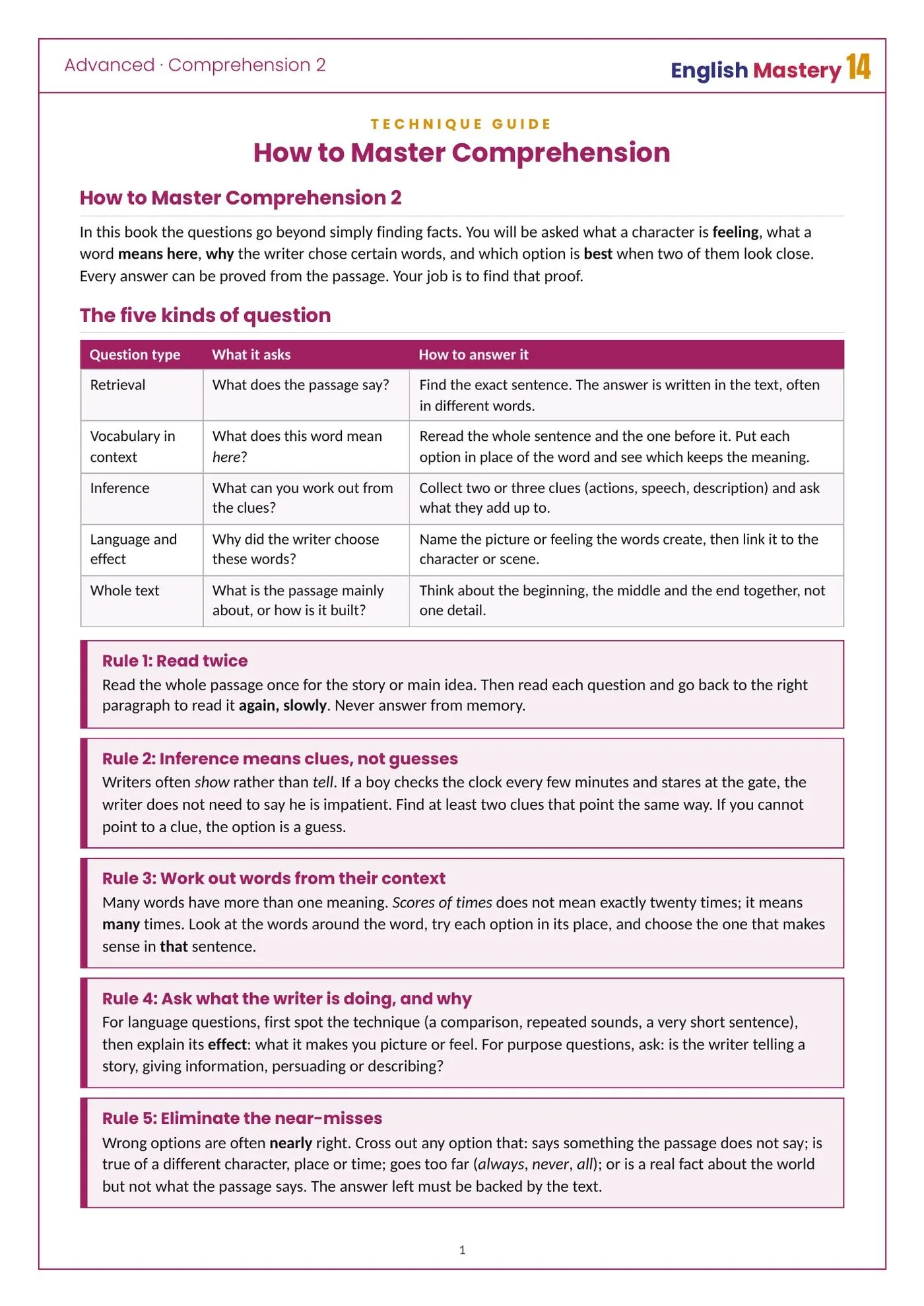
The six steps again, with inference now the main event.
Read twice, underline the key words, find the line, check every option, beware the option that is never said, then read between the lines. Comprehension 1 was mostly retrieval; this book is where inference, vocabulary in context and language questions take over, and the technique page says how to answer each: collect two or three clues and decide what they show; put each option in place of the word; picture it.
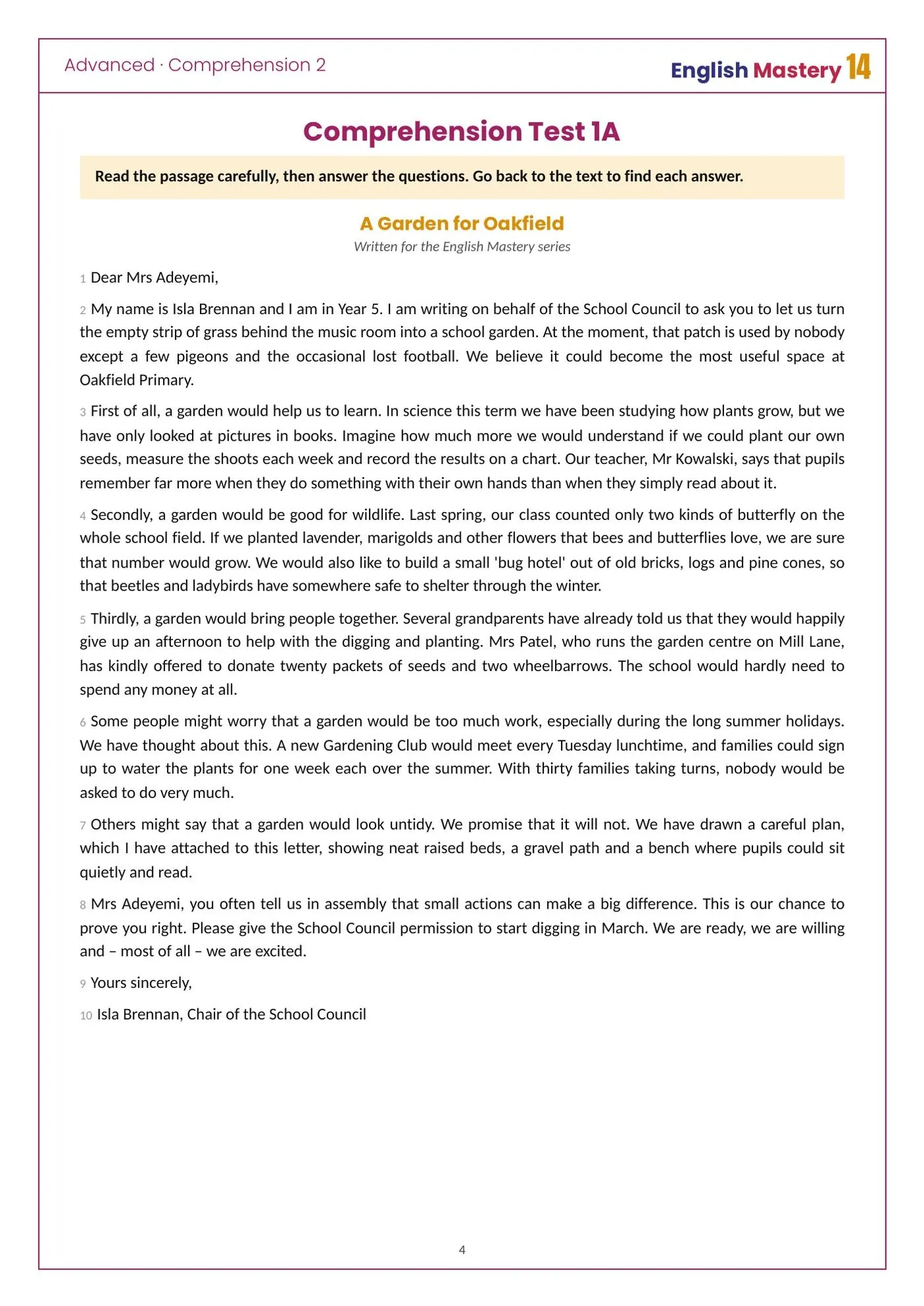
Level 1 opens with a persuasive letter, because the exam does not only set stories.
Isla Brennan, Chair of the School Council, writes to her headteacher asking for a school garden: first of all, secondly, thirdly, then the two objections answered, then the appeal. Numbered paragraphs, so the answers can cite them. The questions that follow are five-option multiple choice, with the distractors drawn from elsewhere in the passage, so a child who answers from memory rather than from the line is caught out.
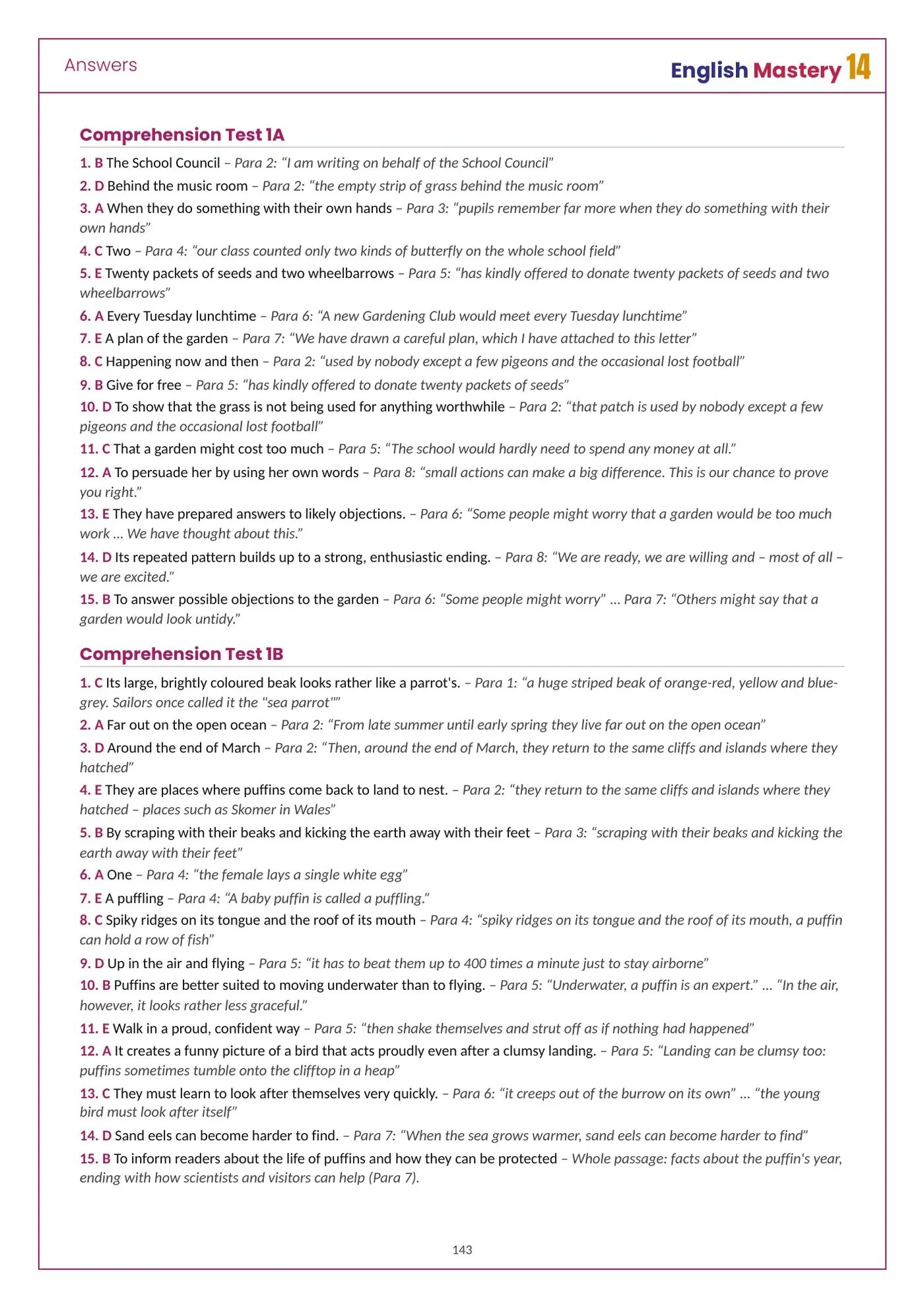
Every answer gives the letter, the answer, and the paragraph and words that prove it.
Thirty passages, every question answered with its evidence quoted, so a child sees where the proof was and a parent never has to argue about an answer. On an inference question the evidence is the two or three clues the child should have collected, which teaches the method as well as the mark.
All 30 passages in the book follow the pattern shown here.
Other Year 4 & 5 books in English Mastery

English Rules 1 Testbook
Quizzes, tests and scorecards for every rule in English Rules 1.

Cloze Sentences 1
Fill-the-gap sentences that teach a child to read for sense, not just for words.

Shuffled Sentences 1
Rebuild scrambled sentences and spot the word that does not belong.

Comprehension 1
Retrieval and basic skills on fiction, poetry and non-fiction passages.